


You don't have to spend hundreds or thousands to improve the SEO of your website. You can start with these simple and basic steps and see how things develop.
As a first step toward improving your website's ranking, you can start implementing these measures yourself or with support. If you want to achieve better and faster results, you can always hire an expert who will work regularly toward achieving the goals you want to reach.
Let's go through the basic 7-step process for improving your website's competitiveness.

On the Frontend
1. Title Tags
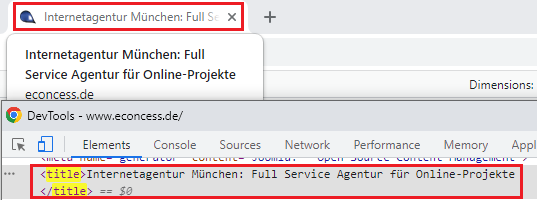
Title tags are elements defined as < title > in HTML documents. They provide information about the HTML document and are only visible in web browser tabs, search engine results, and social networks. Title tags are among the first elements scanned by search engines, and they appear as the actual link on the search results page. This is one of the most important places where you can highlight your keywords, so make sure that the title tag on every page contains your most important keywords. The title tag is also what your visitors will see in their web browsers, in the form of text on the tabs. Title tags are one of the most important on-page ranking factors.
2. META Tags
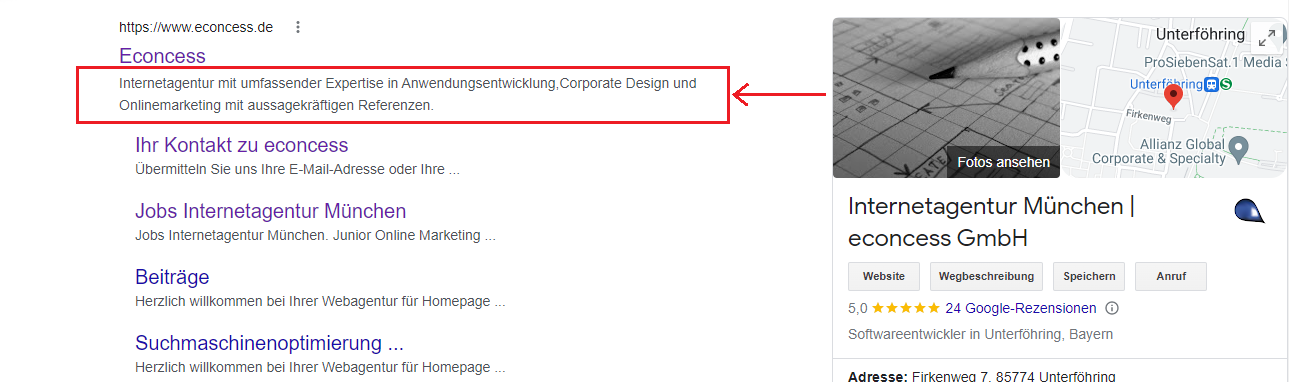
This is one of the hidden tags that are not displayed on the frontend but are important for search engine optimization. When creating your META description tag, it is important to write a sentence that is as concise as possible. Make sure that your text is appealing to read and no longer than 50-160 characters, as search engines often display only the first 155-160 characters of the description tag in search results. It is important that the meta description of each page differs from the descriptions of other pages and directly relates to the page it represents. (moz.com)
You can see the function of a meta description tag in the following example.
There are some opinions that all meta tags are an important Google ranking factor, but we would like to point out that this view has officially been rejected by Google. In 2009, a Google engineer from the Search Quality team published a blog post explaining that meta keywords have no influence on rankings. (developers.google.com).
3. Alt Tags
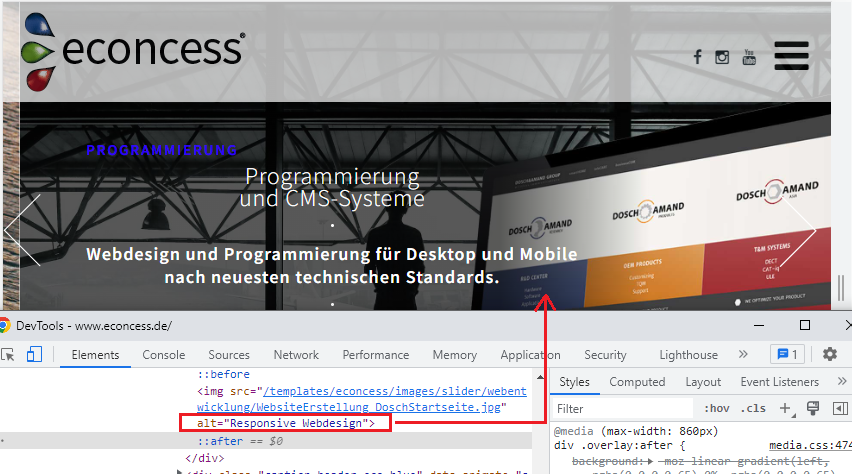
Use alt tags to provide a description for your videos and images. They are important because they allow customers to find your website through image search. They are also particularly important for people who use text-only browsers or screen readers.
Content
4. Headings and Subheadings
First, identify all the keywords you want to use. Make sure that they are relevant, concise, and clearly formulated. You should also make sure that only one h1 tag is used on each of your subpages. Otherwise, duplicate h1 tags can negatively affect your search engine ranking.
5. Page Content
Keyword density is a crucial factor that you need to consider when creating your content. Ideally, you should use your keyword as often as possible in your content, but you need to make sure that you do not use it too often. You want to sell your products to people, not search engines. So if your content is difficult to read, it can leave a poor impression and reduce the likelihood of a conversion.
There is a golden rule in marketing circles: "Content is King." And this should really be taken literally. The better the quality of your content, the better the article can rank even without manual search engine optimization. The quantity and length of articles are also important. But here too, quality takes precedence over quantity.

6. Link Text
The algorithm that search engines use to evaluate websites takes the quality of your links into account, and one factor influencing link quality is whether the link text contains specific keywords.
Use precise keywords in your link text so that readers can better assess the relevance of the link. This also increases the relevance of a page for a particular search term.
It is also advisable to remove distracting URL parameters from the link.
7. Internal Links and External Links
Links within your website are also called internal links. These can include menu links or article links, for example. Internal links help both your website visitors and search engines identify related content. Your visitors use internal links to explore your website and find additional relevant information. Internal links are another way for search engines to navigate your website. If there are no links to a page, it will not be displayed. (yoast.com)
Unlike internal links, external links connect your pages to other websites.
The external links you add can help search engines evaluate the value and quality of your pages. This improves your SEO. They help users learn more about topics they are interested in and attract links from other websites, which improves your search engine optimization. These links point to relevant content that increases the value of your texts.
There is another very important type of link: backlinks (links from other websites to your own), which are considered recommendations and therefore increase the value of your own content.
If you need further support and advice from a web agency or search engine optimizer in Munich, you can contact us.