

This is a question that everyone has to answer for themselves. Design is, first and foremost, subjective. Every person has an individual character and therefore their own personal taste. What one person likes, someone else may find terrible.
That is why one thing is particularly important for a designer: clearly defining the target audience at the beginning of a new project. You cannot create a design that appeals to everyone, and even within a target audience, there are different tastes. However, it is much easier to develop a design for a specific group of people who have similar wishes and requirements for the product. This is particularly important because UX design is about providing users with a positive overall experience with the product. It is therefore the task of a UX designer to understand and take into account the feelings, thoughts, and behavior of the target audience as accurately as possible. From this, the wishes and requirements for the product, as well as the emotions associated with it, can be derived. These should then be implemented and integrated into the design process as comprehensively and precisely as possible.
It is naturally difficult to talk about good design in general terms, as different products come with completely different requirements. Basically, however, a product should always fulfill a purpose and solve a user's problem or support them in achieving a goal. By now, it should be clear that good design must look different for every product and every person. To explain this in more detail, let's take a look at what makes good web design – or at least what I would consider important, as another person might have different priorities.
User-Friendliness
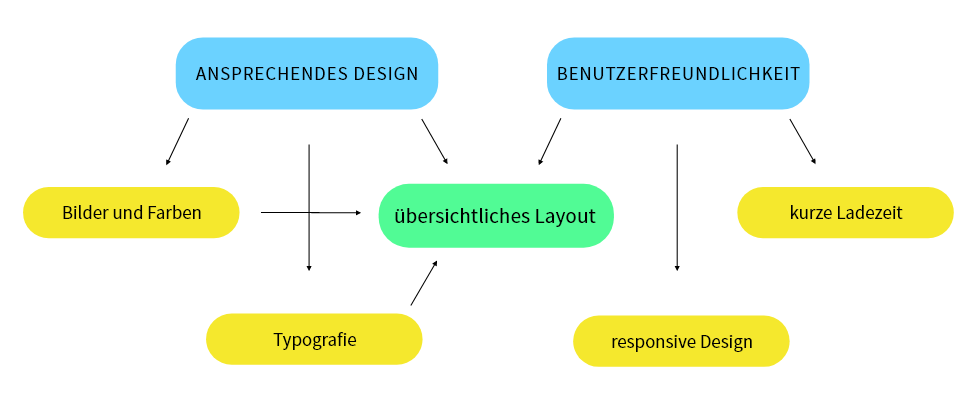
When I think of good web design, the first things that come to mind are user-friendliness and usability. When I visit a website, I have a goal: for example, finding information or purchasing a product. I want to achieve this goal as quickly as possible, and to do so, I need to understand exactly how to navigate the website. The website should therefore be intuitive and simple to use, so that everyone can find the information they are looking for without having to think too much.
Clear Layout
Closely connected to this point is a well-structured, clear, and logical website layout. To make information easy to recognize at a glance, a page must not be overloaded. Here, too, the design principle “Form follows function” (i.e. the form is determined by the function) applies. Every element on the website should therefore serve a specific purpose. Personally, I am a fan of minimalist website design. When there is less content on a page, it automatically appears more organized and well positioned.
Fast Loading Time
This also creates another advantage: If the website is smaller by avoiding unnecessary content, this results in a shorter loading time. This point is particularly important because potential users may not even visit a website if it takes too long to load.
Typography
When it comes to typography, readability is particularly important. The contrast between the background and text color should therefore be as high as possible. The font size should not be too small either, and the typeface also plays an important role. Websites generally use sans-serif fonts because they are quicker and easier to read than fonts with many decorative elements and flourishes.
Typography can also be used as a design element when applied skillfully. One example is using a quotation as a visual divider between two pieces of content. This can simultaneously highlight an important key message, while the font and background color can create an emotional effect for the user.
Colors and Images
Colors evoke different feelings in people. There is a reason why blue is often described as a cool color, red as a warm color, and green as the color of hope. Images can be used according to a similar principle, although the content of the image also plays a role. However, we have once again reached the point where perceptions are entirely subjective. Through the selection of images and colors, a designer can therefore only attempt to evoke a particular emotional response in the user. Nevertheless, a website generally appears friendlier and often better structured when images are used at all.
Responsive Design
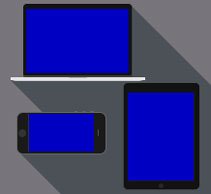
One final important point is that a website should be user-friendly and look good on different devices. It should not matter whether the user wants to access the information on a laptop or quickly check it on their phone while on the go. Given the wide variety of devices with different screen sizes today, responsive design is therefore a must.
If you would like to read more about UX design, take a look at the other blog articles from our web design agency: "What is UX Design?" and "How Does a UX Designer Work?"
For more information about design, visit our Design page, take a look at our agency presentation, or contact us directly.